Pure Amana is a flagship rural-industrial brand within the GAD ecosystem — integrating agrivoltaics, livestock systems, land participation, circular agriculture, and regional enterprise into one scalable platform.
Platform Snapshot
120ha
Strategic Positioning
Pure Amana is not only an agriculture concept. It is a branded integrated infrastructure platform designed to align land, energy, livestock, local enterprise, and climate outcomes into a circular regional economy.
Positioned along the N1 in the Free State, the model responds to logistics inefficiency, low rural value-add, energy constraints, climate exposure, and limited market access by creating infrastructure that captures more value locally.
Core Brand Promise
Land → energy → livestock → processing → fertilizer → crops → local markets.
Building regional nodes that reduce transport burden, support SMEs, and retain value in the Free State.
A model built to be phased, replicated, optimized, and expanded over time.
National Problems / Current Constraints
The current livestock, logistics, processing, energy, and rural development landscape creates avoidable losses across cost, time, climate, and human potential.
Rural Inclusion Imperative
Pure Amana is designed for a Free State context where rural unemployment outperforms national stress levels, youth exclusion is severe, and underemployment limits household resilience. This is why the project combines energy, land, livestock, processing, and SME participation instead of treating infrastructure as an isolated asset.
National unemployment
31.4%
Q4 2025 baseline
Free State rural
37.2%
Higher rural stress profile
Youth unemployment
~60%+
Rural estimate / urgent jobs need
Expanded rural rate
48%+
Discouraged seekers included
Hard-coded insight
Employment gapUnemployment gap
+5.8
percentage points above the national baseline
Manual jobs
50%
of early phases should target labor-intensive activity
Inclusion lens
SME
local contractors, youth, and rural households
Design takeaway
This is why Pure Amana should not present as a solar project only. It needs to read as a rural growth engine with visible labor demand, local supplier participation, and regional value creation.
Logistics Corridor Inefficiency
Free State Rural Constraint
Climate & Systems Gap
Evidence Snapshot
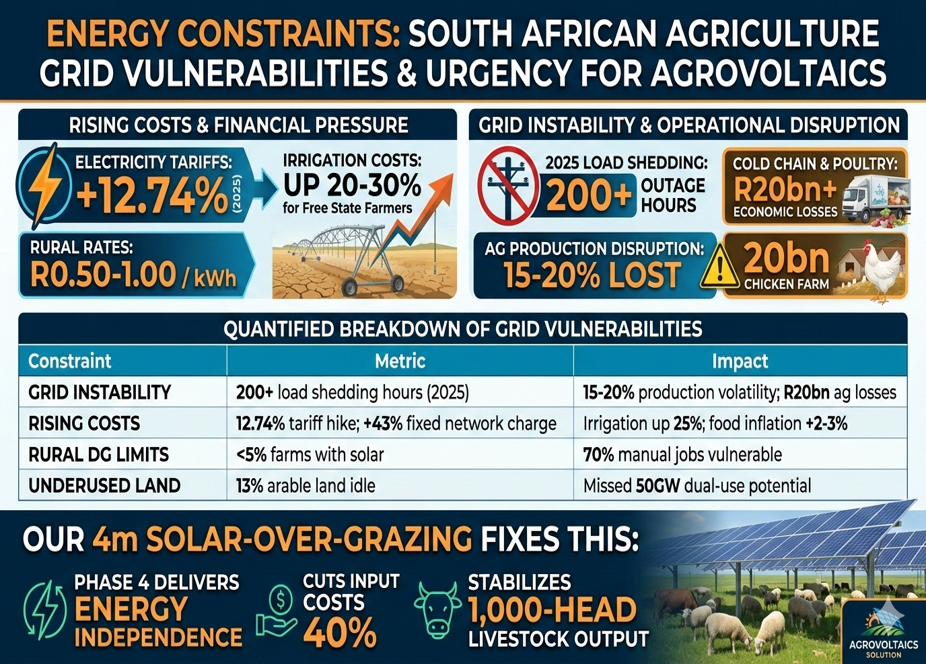
Rising tariffs, irrigation pressure, grid instability, and cold-chain losses create the structural case for agrivoltaics as productive infrastructure rather than optional green add-on capacity.
Climate Resilience Gap
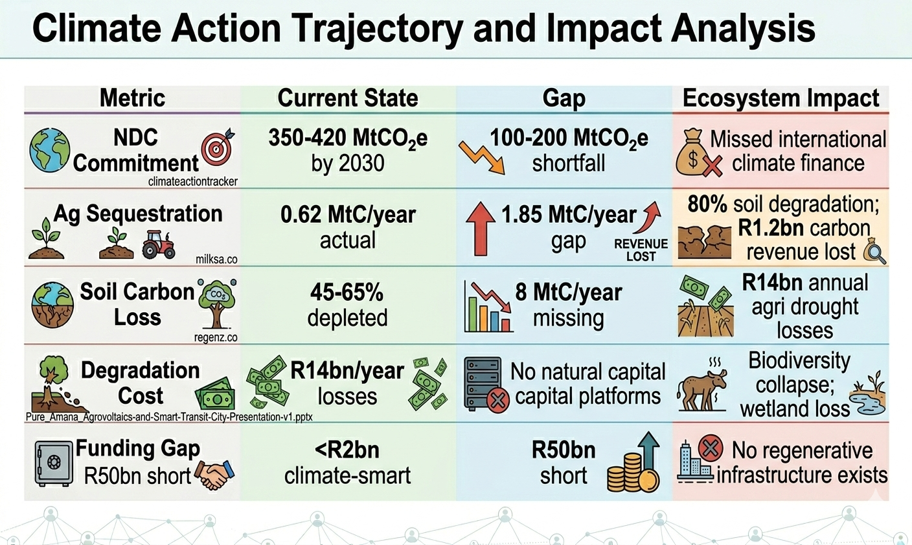
The regional climate case is not abstract. Soil degradation, sequestration shortfall, drought losses, and underfunded regenerative systems all reinforce the need for a closed-loop platform that improves farm resilience while unlocking climate-aligned value.
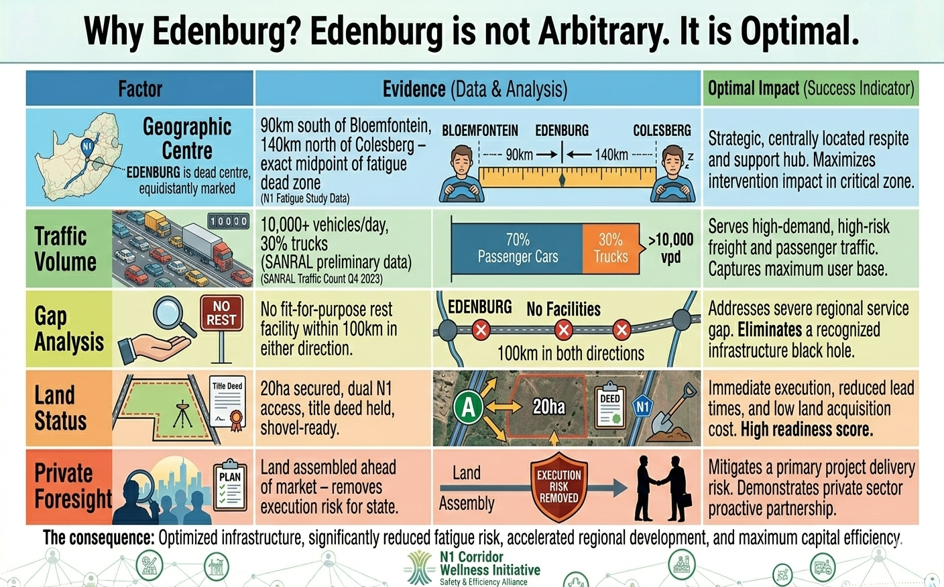
The Edenburg hub model cuts hauls to under 200km, targets mortality below 1%, reduces cost per kilogram, localizes processing, lowers emissions, strengthens energy self-sufficiency, and creates a circular platform for value addition, jobs, and regional competitiveness.
Pure Amana Agrivoltaics
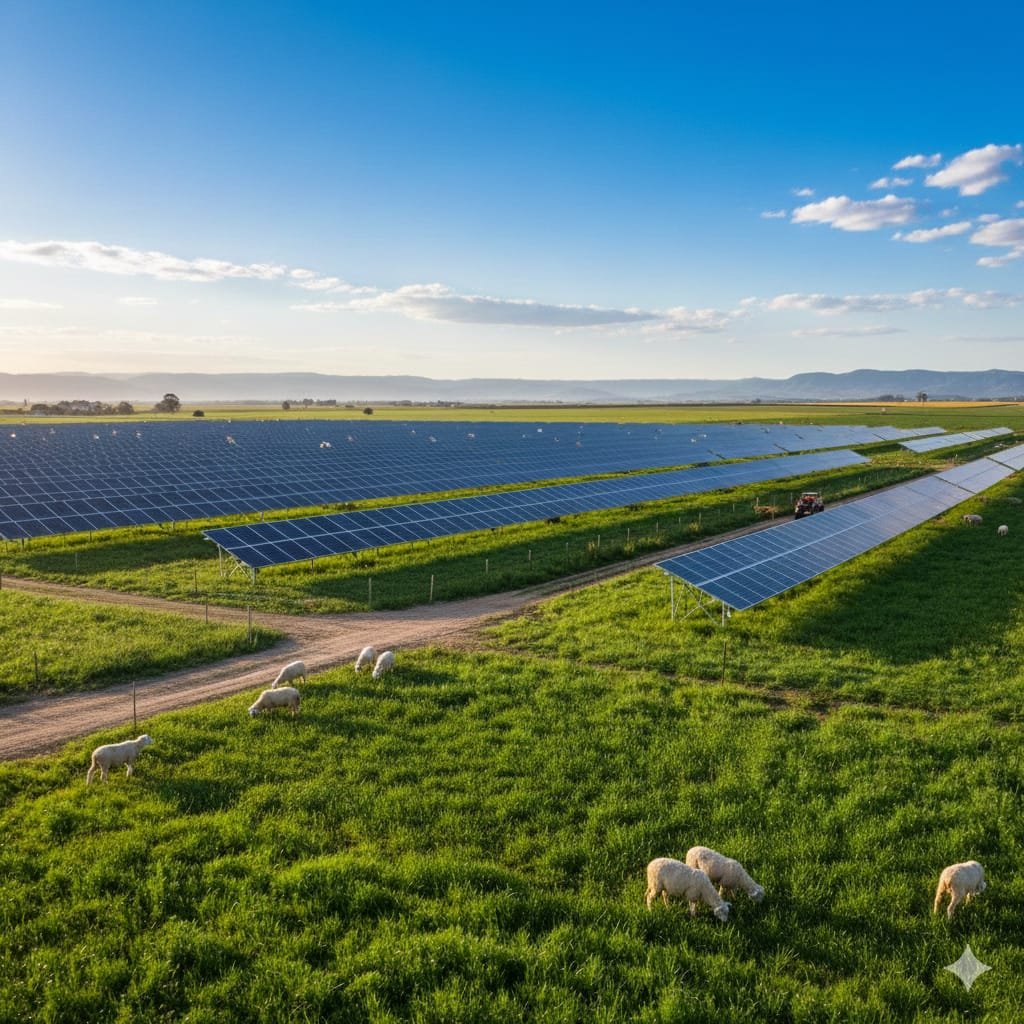
The Pure Amana Agrivoltaic Model integrates land, energy, and livestock into a closed-loop system that builds resilience while generating stacked value across multiple asset classes.
120ha
Solar-linked land platform
25–30%
Equity potential through land participation
System Logic
Instead of treating energy, water, grazing, fertilizer, and soil health as separate activities, Pure Amana combines them into one regenerative operating system. Each layer strengthens the next: solar supports productivity, livestock supports fertility, and circular resource flows reduce waste while improving long-term land performance.
Phase 1: Energy-Equity Foundation
Agricultural Ecosystem
Why It Works
Closed-loop value capture turns energy infrastructure into agricultural productivity, livestock support, soil improvement, and local industrial opportunity.
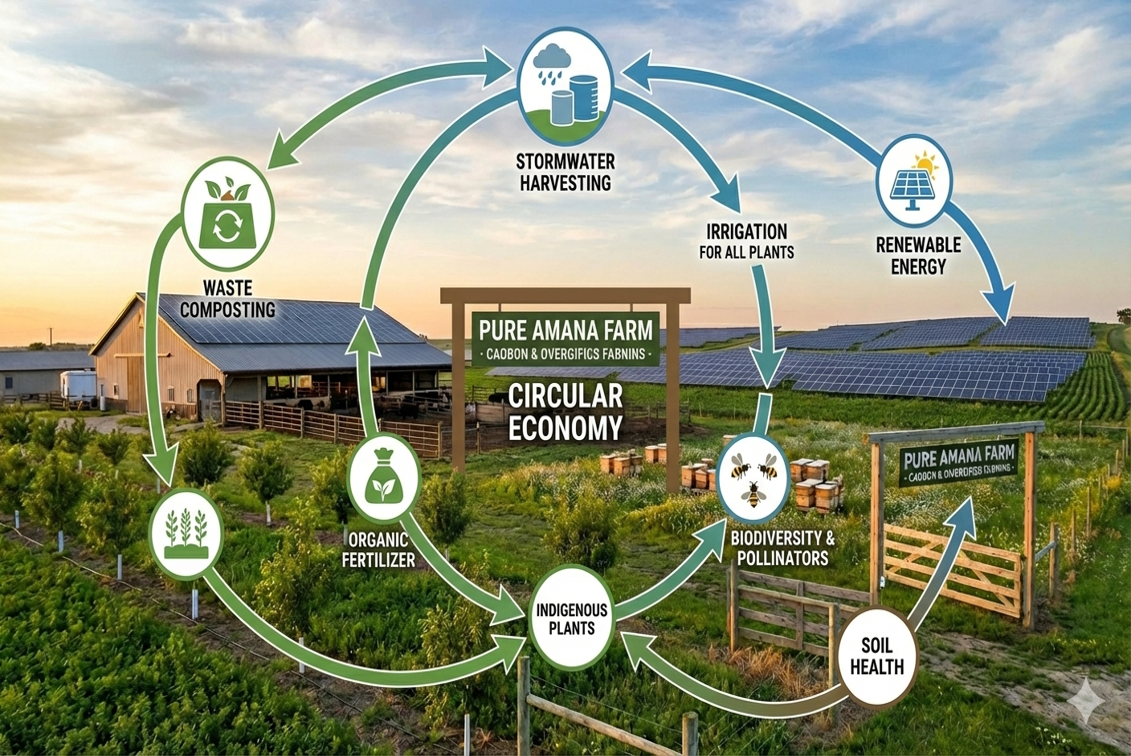
Closed-Loop System Design
This visual shows how renewable energy, irrigation, biodiversity, livestock, composting, fertilizer, and soil health reinforce one another in a single circular operating model.
Resource Efficiency
Water, organic waste, and energy are reused across the system to reduce loss and operating pressure.
Regenerative Output
Livestock, soil health, pollinators, and planting systems work together to strengthen long-term agricultural productivity.
Platform Resilience
The model is designed to improve resilience, diversify returns, and create durable rural-industrial value over time.
Integrated Regional Development Response
The platform combines agro-energy, livestock processing, local sourcing, enterprise participation, and circular resource flows into one linked regional node.
Agrivoltaic energy generation tied to land equity, operating efficiency, and self-sufficiency outcomes.
Better haul distances, lower mortality, local value-add, and circular by-product utilization.
Verified producers and SMEs within a 100km radius gain stronger local and corridor-linked market access.
Manure, soil enhancement, forage systems, and crop inputs feed back into a regenerative, lower-waste operating model.
Regional Systems View
The broader development thesis links energy security, rural industrial production, local jobs, and freight corridor efficiency into one regional operating system rather than disconnected projects competing for limited impact.
Why Edenburg Works
Edenburg sits in a corridor position that supports shorter haul distances, better logistics, lower fatigue risk, faster regional access, and a more defensible long-term infrastructure case.
Positioned between high-demand routes with clear freight relevance and reduced transport friction for regional movement.
Site control, access, and execution readiness improve project timing, capital efficiency, and implementation confidence.
The location supports the ambition to anchor processing, local value-add, and a corridor-servicing operating node.
Barn Market – Pure Free State
Local Enterprise Opportunity
Investment Case
Pure Amana is positioned as a private sector–led infrastructure response aligned to national development priorities, climate resilience, energy participation, and regional economic growth.
Capex
R1.7bn
Total investment – agrivoltaics platform
Timeline
2026–2031
Initial build and operating phase
Next Phase
2031–2036
Second mega project expansion horizon
Model
Closed-Loop
Energy, land, livestock, and circular value creation
Summary
It combines agrivoltaics, energy participation, livestock systems, local processing, circular agriculture, and SME market access into one integrated ecosystem. This is not just a development concept — it is strategic infrastructure positioned to unlock stronger local economies, climate gains, and long-term value creation.
Contact Details
Pure Amana is positioned for collaboration with investors, infrastructure partners, development institutions, public sector stakeholders, and strategic operators aligned to regional growth.
Central Email
edenburg@gadcs.co.za